
The backbone material
Tex2Tex®
Textile-to-textile recycled polyester from our Thermo-Mechanical Reactor™.
Post-industrial textile waste, engineered back into virgin-grade pellets, fiber, yarn, fabric, and garments—without bottles.
- Process
- TMR™ textile-to-textile recycled polyester
- Outputs
- Pellets - Staple Fiber - Filament - Spun Yarn - Nonwovens
- Status
- Commercial
The problem
The global textile waste crisis
The world produces massive amounts of textile waste, yet there is nearly zero commercial-scale polyester textile-to-textile recycling. Current recycled polyester supply depends almost entirely on plastic bottles—not textile waste.
In focus
01 / 04Global textile waste
0 M tons
The world generates approximately 92 million tons of textile waste annually. Most is downcycled, incinerated, or landfilled.
Relative scale
By the numbers
Select to read more
Tap a row to read more
Why Tex2Tex®
Six reasons brands switch.
From feedstock integrity to drop-in manufacturing—everything a sourcing team needs to move off bottle RPET.
- 01
No bottles. No downcycling.
Textile-in, textile-out. We don't compete with food-grade PET streams.
- 02
Cost competitive
Priced to scale alongside virgin polyester, not as a boutique premium.
- 03
Lowest LCA footprint
Lower impact than virgin PET, bottle RPET and chemically recycled PET. Independently verified.
- 04
Built at scale
Industrial reactor capacity, multi-tonne lots, repeatable supply.
- 05
Consistent quality
Validated quality performing at or above many of our leading brand customers' standards.
- 06
Plug-and-play
Drop-In solution for any supply chain, validated in 1000s of product.
The problem — from challenge to legislation
Less than 0.25% of polyester is textile-to-textile.
In 2024, global apparel polyester consumption grew from 71 to 78 million MT. Almost all of it is virgin. Minimum recycled content rules are now landing.
2024 Apparel Industry Polyester Consumption
- Virgin Polyester88%
- RPET from Bottles12%
- RPET from Textile Waste / Ocean Plastic0.24%
- Bio Polyester0.01%
Source: Textile Exchange Preferred Fiber & Materials Market Report 2025
Incoming legislation
Environmental Cost Label — France
Score based on 16 LCA indicators (GHG emissions, water use, biodiversity impact, microfibre release, chemical use). Voluntary Phase: 1 October 2025. Mandatory: April 2026.
Incoming legislation
ESPR — EU Ecodesign for Sustainable Products Regulation
Will obligate textiles to meet minimum recycled content, durability, and transparency standards. Formally adopted 2027, compliance expected ~2028.
Tex2Tex® is built for the regulation curve — minimum recycled content, traceable, certified, available now at 120 kt/yr.
Technology
What is Tex2Tex®?
A proprietary Thermo-Mechanical Reactor™ (TMR™) process that transforms polyester textile waste into high-quality recycled PET pellets—without chemical inputs.
Collection
Post-industrial and post-consumer polyester textile waste is sourced from mills, brands, and collectors worldwide.
Swipe or tap to explore steps
Feedstock → output
Material flow & revenue streams
Click any feedstock or output to trace connections through the TMR™ process.
2,500 MT/month feedstocks immediately available
Feedstocks
Project output
Value-added revenue streams
outsourced / partner production
58 items
Product Catalogue
Browse our full product range.
Browse by material — pellets, fiber, yarn, and fabric. Click any item for specifications; sign in for full details, certifications, and ordering.
152
Products
5
Categories
Order Tracking
Track orders in real time.
Track orders in real time with Tex2Tex® — including production status, traceability, sustainability data, transaction certificates, and quality control documentation, all in one dashboard.
Sign in for live order data · preview only
ABC Customer Dashboard
Track your production orders and delivery status.
ABC Customer
Orders Delivered
109
of 121 total orders
ABC Customer
Total Fabric Delivered
2,723,976
Meters
ABC Customer
Total Pellets, Fiber & Yarn
3,290,317
KG
ABC Customer
Product Categories
5
distinct categories
| Order # | Brand | Product Category / Style # | Qty | Delivery | Status | |
|---|---|---|---|---|---|---|
148 2026-05-07 | Coach W25 | T2T-001W/Jupiter Tex2Tex® | 75,000m | 2026-10-09 | Complete | View |
149 2026-05-07 | Coach W25 | T2T-001W/Jupiter Tex2Tex® | 75,000m | 2026-10-25 | Complete | View |
150 2026-05-07 | Coach W25 | T2T-001W/Jupiter Tex2Tex® | 75,000m | 2026-11-29 | Complete | View |
151 2026-05-07 | Coach W25 | T2T-001W/Jupiter Tex2Tex® | 75,000m | 2026-12-30 | Complete | View |
152 2026-05-07 | Coach W25 | T2T-001W/Jupiter Tex2Tex® | 75,000m | 2026-02-06 | Complete | View |
153 2026-05-07 | Coach W25 | T2T-001W/Jupiter Tex2Tex® | 75,000m | 2026-02-11 | Complete | View |
154 2026-05-07 | Coach W25 | T2T-001W/Jupiter Tex2Tex® | 75,000m | 2026-04-11 | Complete | View |
155 2026-05-07 | Coach W25 | T2T-001W/Jupiter Tex2Tex® | 75,000m | 2026-06-15 | Complete | View |
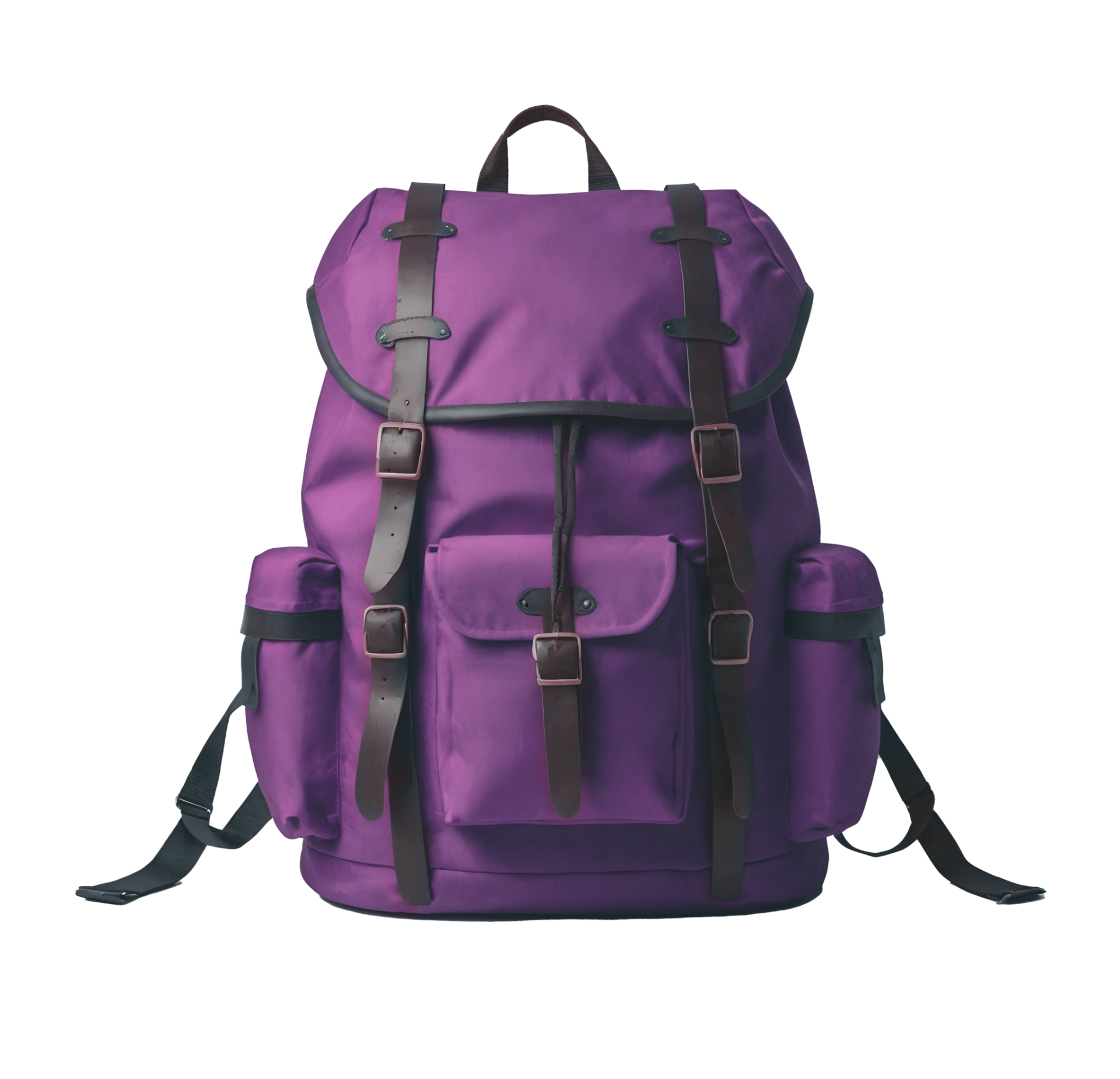
Applications
Where Tex2Tex® goes to work.
Application
Apparel & Accessories
Outerwear · Bags · Backpacks · Sportswear
Recognition
Awards & accolades
EU Horizon Grant
European Union innovation funding recipient
NSERC Grant
Canadian research council funding
Global Change Award
H&M Foundation innovation award finalist
Industry recognition
Featured in leading textile industry publications
Sustainability awards
Multiple sustainability and innovation accolades
USPTO patents
Multiple patents for bolt-on technologies under draft
Sustainability
Environmental impact
Percentage reductions vs bottle rPET, chemically recycled, and virgin polyester — with relatable equivalents at your annual volume.
Annual consumption: 9,500 Kgs/yr
CO₂ emissions snapshot
~84% less than virginRelative index · virgin polyester = 100%
- Tex2Tex®
- Bottle rPET
- Chemically recycled polyester
- Virgin polyester
~84%
less vs Virgin polyester
~34%
less vs Bottle rPET
~76%
less vs Chemically recycled
Demonstrative comparison
~266K km
Equivalent to driving a passenger car
Compared to virgin polyester at your annual volume
Sign in for site-specific LCA reports and exports.
Open toolsBuild with us
Start your Tex2Tex® product.
Tell us your volume, your application and your timeline. We'll engineer the material.
Talk to us